We can't wait to celebrate with you in Italy!

Ray & Clare
Ray & Clare
Things to Do
Ravello’s History
Perched above the Amalfi Coast, Ravello has captivated visitors for centuries. The town rose to prominence as part of the Duchy of Amalfi from the 10th century onward, flourishing through trade with North Africa and the Byzantine Empire. Wealth from that era funded the construction of civil and religious buildings in an Arab‑Sicilian style and elegant residences like the 13th‑century Villa Rufolo. Ravello declined after the 14th century and was further diminished by the 17th‑century plague, but its legacy endured through art and music.
In the late 19th century Richard Wagner found inspiration in Villa Rufolo’s gardens, which influenced scenes in Parsifal. Today the Ravello Festival (often called the Wagner Festival) runs in July and August, offering outdoor concerts in the villa’s gardens and a program of classical, chamber, and jazz performances.
The town’s literary connections are equally rich—writers from D.H. Lawrence to Gore Vidal have found Ravello quietly inspiring.
In 1927 D.H. Lawrence wrote parts of Lady Chatterley’s Lover in Ravello, and Gore Vidal fell so in love with the town that he lived here for 30 years and became an honorary citizen. Around the turn of the 20th century Villa Cimbrone drew Virginia Woolf and members of the Bloomsbury Set, including John Maynard Keynes. By the 1950s and ’60s Ravello acquired a glamorous reputation, hosting guests such as Greta Garbo, Humphrey Bogart, Winston Churchill, Jackie Kennedy and Pierce Brosnan.
Though Ravello has no beach, its mountaintop setting offers commanding views over the Amalfi Coast and a rich artistic and musical heritage visible in every cobbled street and alley. Don’t miss the gardens: Villa Cimbrone’s iconic terrace and the terraced Villa Rufolo gardens that inspired Richard Wagner.
The town’s quiet, dignified charm feels distinct from busier Amalfi and Positano; staying in a hotel with a view lets you enjoy the mornings and evenings when day-trippers have left. Ravello is small enough to explore on foot but note it’s not very accessible for limited mobility because of cobblestones and many steps.
For further reading and inspiration, see Isabelle Hoynes’s articles on Cultured Voyages: https://culturedvoyages.com.
Villa Cimbrone
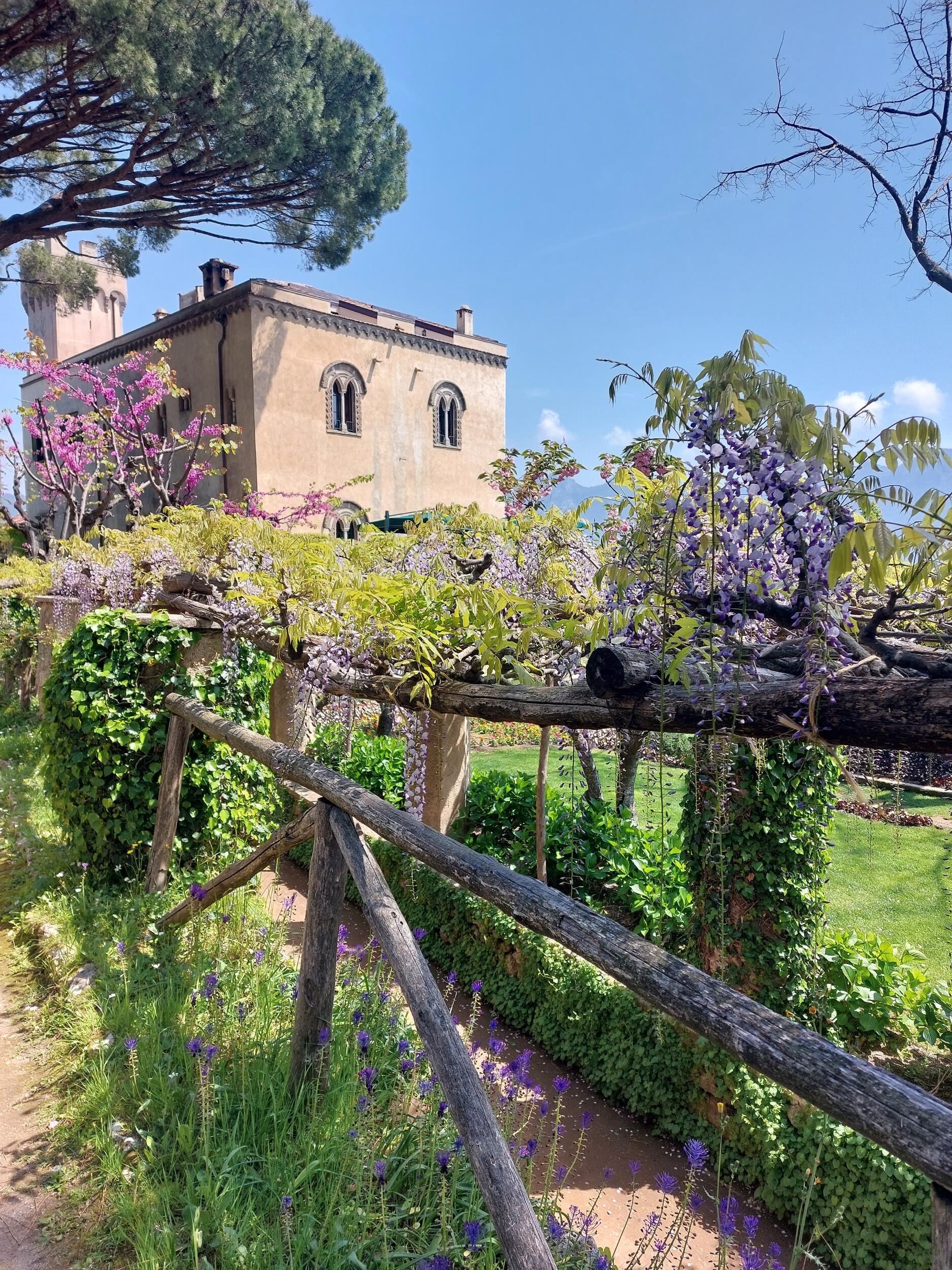
We got engaged here — one of our favourite spots in Ravello. Perched at the town’s apex, Villa Cimbrone is an elegant 11th‑century manor whose resplendent gardens hover above the Tyrrhenian Sea. The villa is now a luxury hotel, but the gardens are open to visitors (fee applies) and offer some of the most spectacular views you’ll find on the Amalfi Coast. Head to the famous Infinity Terrace (Terrazze dell’Infinito), also called the Belvedere, for the best panoramas; the cliff‑top terrace is lined with Romanesque busts and feels utterly timeless.
Allow ample time to explore the gardens — don’t miss the Temple of Bacchus, the sweeping views toward Scala, and the deep ravine below.
Practical info: Admission approx €7 (ticket booth at gate); Opening hours 9:00am–7:00pm.
Villa Rufolo

Located just off Piazza Vescovado, Villa Rufolo is a 13th‑century patrician villa famed for its restored terraced gardens and Moorish cloister. Rebuilt in the 19th century by Scottish botanist Sir Neville Reid, the villa’s gardens offer the dramatic sea views that inspired Wagner and host the Ravello Festival each summer.
Plan your visit: Admission approx €7 (ticket booth at gate). Summer hours 9:00–21:00 (last entry 20:30); winter hours 9:00–sunset.
Piazzo Vescovado

Piazza Vescovado — The town’s atmospheric square is the best place to settle in and take in Ravello’s unrivaled views. Lined with cafés and bars and framed by Ravello Cathedral and the entrance to Villa Rufolo, the piazza is ideal for a coffee, gelato, or evening glass of wine while you watch the world go by. Afterward, wander the winding streets and discover multiple cliffside vantage points—each offers a fresh, unforgettable view of the Amalfi Coast.
Things to do around Ravello
Pompeii & Herculaneum

Life in Pompeii and Herculaneum changed forever on one morning in 79 AD when Mount Vesuvius erupted, sending ash and pumice into the air and freezing two Roman towns in time. Pompeii was a large, bustling commercial city (about 66 hectares) buried by ash — today you can wander its stone-paved streets, see painted election slogans, and view plaster casts of victims. Herculaneum was a smaller, wealthier seaside town (around 4–4.5 hectares) buried under deeper volcanic mud, which preserved organic materials like wood, food, and multi‑story buildings; here you’ll find intact wooden doors and vivid frescoes. Both sites offer complementary experiences — Pompeii’s expansive ruins and Herculaneum’s intimate, well-preserved homes — and can be visited from Ravello as a day trip. Vesuvius itself is also open to visitors at times on a restricted basis.
Capri boat trip

The moment you step off the boat at Marina Grande, Capri hits you with its contrasts: crowds queue for the funicular, luxury yachts bob in the harbour, and designer boutiques beckon. We visited on a one-day cruise that included the Blue Grotto, a refreshing swim, and a sun-soaked day at sea. After riding the funicular to the town, we wandered the streets, savored gelato, and soaked up Capri’s glamorous, timeless atmosphere — a perfect day trip from Ravello.
Visit other towns along the Amalfi coast

If you’ve exhausted Ravello, it’s an ideal base for exploring other Amalfi Coast towns—many are reachable by frequent ferries from nearby Amalfi or Minori, or by short drives and buses.
The best day trips from Ravello include:
Amalfi — The coast’s namesake town sits in a dramatic ravine at the foot of Monte Cerreto. Visit the 11th‑century Cathedral of Saint Andrew, wander narrow lemon‑scented streets, and browse artisan paper shops.
Positano — A vertical, pastel‑colored town of steep streets and cliffside views. Famous for its cafes, boutiques, and lemon ceramics, it’s picturesque and lively.
Furore — A tucked‑away village known as the “town that doesn’t exist,” spread across cliffs. Don’t miss the Fiordo di Furore: a narrow gorge with a tiny beach, old fishermen’s cottages, and a striking bridge.
Atrani — One of Italy’s smallest municipalities, Atrani feels quiet and medieval, with a central piazza, a small beach, winding stairways, and the Collegiate Church of St. Mary Magdalene.
Praiano — A tranquil fishing village between Positano and Amalfi, Praiano offers authentic local charm, dramatic coastal views, and unforgettable sunsets from Marina di Praia.
Minori — A charming, tranquil town often called a "hidden gem" or the "City of Taste" for its culinary traditions. Nestled between Amalfi and Maiori, Minori offers a laid-back, authentic, and budget-friendly alternative to busier neighbors, with a sandy beach, Roman ruins, and the scenic Sentiero dei Limoni (Path of the Lemons).
Maiori — A family-friendly town with the coastline’s longest sandy beach and a broad promenade. Maiori has a relaxed, authentic vibe and is a great spot for easy beach days and casual seaside dining.
Vietri sul Mare — Known as the "first pearl of the Amalfi Coast" and Italy’s ceramics capital, Vietri sul Mare features vibrant hand-painted pottery across its streets, a 17th-century majolica-domed church, and rare sandy beaches—offering a calmer alternative to the more touristy villages.
Cetara — A tiny, traditional fishing village and a welcome break from the fast lane. Famous for its anchovy-based coltura di alici, Cetara is perfect for seafood lovers. We took the ferry here and ate at Ristorante Aquapazza, choosing a whole fresh fish from a platter (this is expensive but a special experience), when the return ferry was canceled due to weather, we enjoyed a walk to the main part of town and caught a SITA bus back to Ravello.
Sorrento — Not technically on the Amalfi Coast but a popular nearby destination, Sorrento is known for its hills, small ceramics, lacework and woodwork shops, and views of Naples, Vesuvius, and Capri. The scenic Amalfi Drive connects Sorrento and Amalfi; consider winery tours on the Sorrentine Peninsula.
Many smaller towns offer respite from crowds in places such as Positano and Amalfi. Wander among locals and find authentic restaurants for a more traditional Italian holiday experience.
Local walking trails

Thanks to its sweeping views and one-of-a-kind scenery, the Amalfi Coast is a favourite destination for hiking. You’ll find trails for every pace and ability, from gentle seaside strolls to more demanding mountain paths. Several great routes are accessible from Ravello. Path of the Gods — The coast’s most famous trail runs about 7 km between Bomerano and Nocelle, climbing to the highest vantage points on the Amalfi Coast with astonishing Tyrrhenian Sea panoramas. Many hikers finish in Nocelle and continue down to Positano; return options include the SITA bus via Amalfi or a ferry from Positano to Amalfi or Minori.
Ravello → Minori/Maiori & the Lemon Walk — A well-worn stone-step route descends from Ravello to the seaside town of Minori in roughly 30–60 minutes, passing homesteads, little churches and dramatic viewpoints. From Minori you can follow the Sentiero dei Limoni (Lemon Walk) through lemon groves to Maiori (about an hour). Consider walking Ravello → Maiori, returning to Minori for a swim and a meal.
Ravello → Amalfi — Several scenic routes lead downhill to Amalfi through terraced hills and stone paths. Popular options pass Pontone and Atrani; a direct walk through Atrani takes about an hour downhill (longer if you add Scala). Note the return to Ravello is steep and step-heavy — buses between Amalfi and Ravello run frequently if you prefer not to climb back.
Naples

We stayed in Naples for one night to check it out so that we could recommend it to you all. It is not for the faint of heart! It is chaotic, vibrant, bustling, colourful, full of character and absolutely fabulous. We went straight to our hotel accommodation and then spent a day wandering the city centre restaurants, shops and bars. It is famed for the small street food vendors, the Margeurita pizza and the hustle and bustle of the city. Many of the hotels and accommodation in the city are in piazzas behind large doors, so it took us a long time to find our hotel but it was worth it!
We spent one day there and stayed in Napolit'amo Hotel Principe on Via Toledo, it is located behind a large steel door with a small buzzer at the side so you will have to look for it but it is clean and fresh with a modern twist inside a traditional building. It is located on the main shopping street and close to the port, we got the ferry there from Amalfi.
We dined in Pizzeria Brandi, the home of the Margherita pizza, we walked back through the area via the laneways parallel with Via Toledo, and sampled some of the street vendors foods.
These articles from Cultured Voyages is a great overview of Naples if you wanted more information for your visit. https://culturedvoyages.com/naples-in-one-day-itinerary/ and https://culturedvoyages.com/visiting-naples-italy-guide/
Take a boat trip along the coast or to the Islands

Glide along the Amalfi Coast by sea for a completely different perspective—towering cliffs, pastel villages, and hidden grottos unfold best from the water. We recommend a full-day boat trip so you can hop between coves and coastal towns, stop for swims and sunbathing, and savour lunch on board or in a seaside village. Private excursions, shared boats, and scheduled ferries all run from nearby ports—pick based on pace and budget. If a boat charter feels like too much, town-hopping by ferry is an easy, equally delightful alternative.
Go to the beach down on the coast
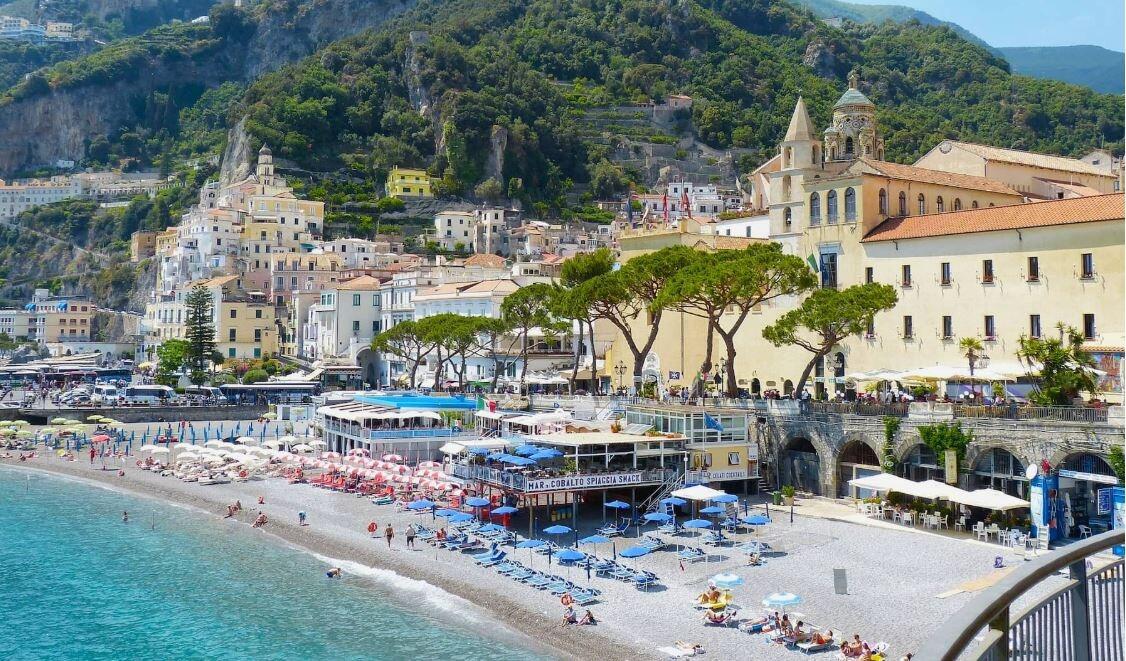
Ravello perches high on the cliffs and has no direct sea access, so you can’t swim from the town itself. The nearest beaches are in Minori (directly below Ravello, reachable on foot via the trail) and Amalfi (more convenient by public transport). Buses run from Ravello down to Amalfi; walking to Minori gives a more scenic, coastal route.